What’s on in Turin: events and attractions for tourists, occasional visitors and expat
Spring has finally arrived and Turin, as well as the nearby towns and villages. Our region is literally blooming. Many are the opportunities to take a walk among flowers and chirping birds. Do I sound ridiculously happy? I am because I love this season. Bye bye cold winter, you won’t be missed.
Let’s start exploring the centre then where in the Medieval Botanical Garden inside Palazzo Madama you can discover ancient herbs.

Until May 1, at the Castle of Pralormo, it is possible to visit the 13th edition of Messer Tulipano. The castle gardens are covered with colorful tulips. A pure pleasure for the eyes. But tulips are on display also in Grugliasco, near Turin. Cascina Duc opens its doors where more than 50,000 tulips await you.
Easter at the flee market
Every second Sunday of the month, a huge flea market develops around the narrow streets of the ancient borough called Borgo Dora. This April, Gran Balon will take place during Easter, on April 9. If you are in town, you can take a stroll in search of bargains and maybe stop in one of the many restaurants and trattorias of the area.
But why not organize a pic-nic in the many castles around the city? Fai, the Italian Fund for Environment, has scheduled many events at Castello di Masino and Castello della Manta. Or head to Maggiore Lake and enjoy trekking in the Lake District. But don’t forget to come back to Turin!

Art
Leonardo Da Vinci is the protagonist of the months to come. From 7 April to 9 June, the Royal Library will give visitors the opportunity to admire manuscripts, ancient books, and maps, in order to outline the life of the Renaissance genius.
Two are the exhibitions that can be seen at Pinacoteca Albertina, one dedicated to neoclassicism in Turin and the other to Francesco Franco, one of the past Masters of the Fine Art Academy.
Until May 15, horror lovers can visit the exhibition dedicated to Dario Argento at the National Cinema Museum.

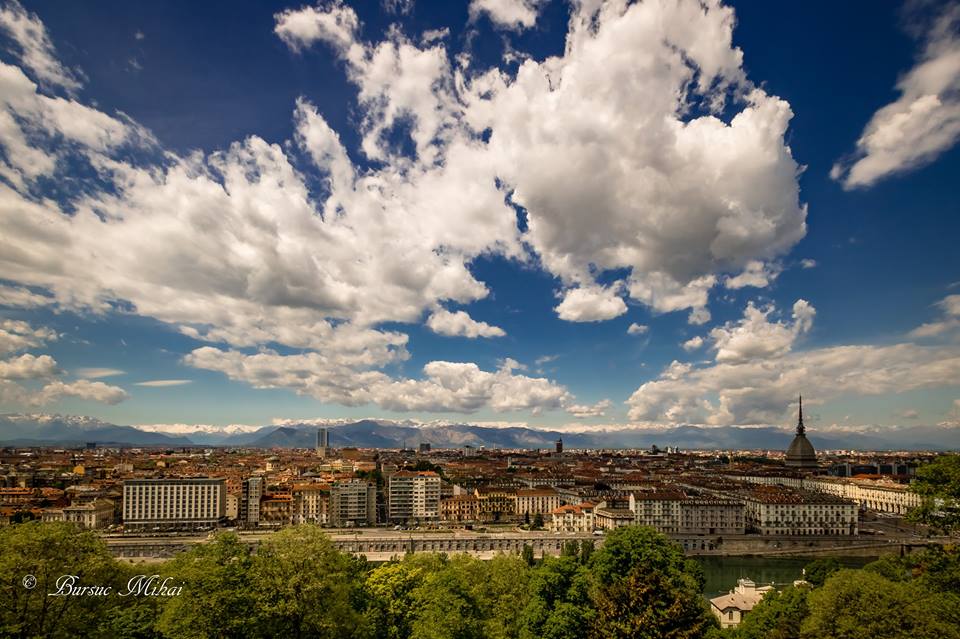
Two are the reasons to visit the National Mountain Museum: first, from its terrace you can enjoy an amazing view of the city and the surrounding Alps, and second its several exhibitions, with a wide 3D section, to immerse yourself in the amazing scenario that nature can offer.
Until 11 April, you can visit the GAM collections with highlights of works from Italy’s unification to the dawn of the twentieth century, together with a retrospective dedicated to Alberto Moravia and Michael Snow.
If you love contemporary art, don’t forget to visit Fondazione Sandretto Re Rebaudengo, with exhibitions dedicated to Ambera Wellmann, and Victor Man, among others.
Wide choice also at MAO, where visitors, along with the four floors of the permanent exhibition, can visit the Buddha10 exhibition.
Until April 10, the Museo Nazionale del Risorgimento, a museum dedicated to the unification of Italy, hosts an exhibition dedicated to Garibaldi as a Pop Icon.
Artists in the Time of War is the title of the exhibition at the Castle of Rivoli, open until November 2023. And until July 2023, you can still enjoy the Trembling horizons of Olafur Eliasson.
La Venaria Reale is also open with its many exhibitions, the enchanting Gallery of Diana, and a rich program of theatre and performances.
Theatre
Teatro Regio celebrates its 50th birthday since its reopening after a fire destroyed it. Many are the events on schedule but do not miss the opportunity to visit it for free Saturday 15 and Sunday 16 April. Get ready to discover its many secrets behind the scenes.

Music
This is Indie is the 9-hour festival that will take place at Spazio 211 on Sunday 9 April. From 2 pm to 10 pm, you will find pop music, a food truck, DJ sets, and a chill-out area. Bring your own towel to relax.
Fairs and exhibitions
The 26th edition of Torino Comics opens on April 14 and this year’s main theme is “Be your superhero”. This important event dedicated to comics and pop culture attracts more than 60,000 visitors every year. Don’t be surprised to meet cosplayers while discovering books, CDs and videogames! Or put your best costume on and enjoy this unusual carnival. Until April 16.
On 15 and 16 April, at Cascina delle Vallere, Bike Piemonte organizes a fair dedicated to bikes. The event is free but you shall register here. In this park, a protected area that develops along the Po River, you can also camp.
For children
In the beautiful Park of La Mandria, near the Hunting Londge, Ciabot degli Animali organizes workshops dedicated to children aged 6-13. The necessary equipment is provided by the association, you shall only bring a free USB stick of at least 2GB to download the photos taken during the workshop. For info and booking send an email here.

A stop that cannot be missed is Mufant, the first Italian museum dedicated to Sci-Fi. Visit also its Park of Fantastic.
Another spot children will absolutely love is the Medieval Village inside Valentino Park.
Both Mufant and Medieval Village have special openings during these holidays.
And for a moment of pure pleasure…
Do we love globalization? Personally, yes as far as food is concerned. If you are visiting Porta Palazzo or Borgo Dora, stop at Mercato Centrale. Enter and, on the left, you will find a bakery that, together with bread and pizza, bakes Maritozzi at every hour. Maritozzo is typical of Rome and just a few years ago could not be found in Turin. This is what I call progress. So, take a walk in Borgo Dora, and have dinner there, but leave some space for a Maritozzo with whipped cream at Mercato Centrale.
Happy Easter!
Lori Barozzino
Lori is an interpreter and translator who lives in Turin. If you want to read more, here’s her blog.


Maria Luisa Coppa
La paura del Turco alle porte dell’Europa angosciava sempre di più la Cristianità europea, non solo a livello politico e militare, ma anche religioso. Cominciò così a diffondersi in Occidente un intenso bisogno spirituale di riprodurre anche nelle nostre terre i luoghi della Terra Santa verso la quale il tradizionale pellegrinaggio stava diventando troppo pericoloso per la presenza musulmana e per l’avanzata in Asia dei sultani ottomani. Per sostituire il cammino religioso nella città di Gesù nacquero i Sacri Monti, una serie di cappelle incastonate sulle alture oppure vennero costruite in varie città copie della Rotonda dell’Anastasis o dell’edicola del Santo Sepolcro. La Settimana Santa ci porta alla Pasqua e ci ricorda che Gerusalemme è ovunque, non solo in Israele. Durante il Venerdì Santo interi paesi, soprattutto nel Meridione, si trasformano in quartieri gerosolimitani con gruppi di persone che sfilano per strada e accompagnano Gesù verso il calvario lungo la “Via dolorosa”. Ogni anno, nei giorni della Settimana Santa, molte località rivivono con sacre rappresentazioni la Passione del Signore e ogni Giovedì Santo fioriscono i “Santi Sepolcri”. È difficile trovare una chiesa senza le quattordici stazioni della Via Crucis che ripercorrono il cammino percorso da Gesù dall’accampamento di Pilato alla collina del Calvario. Gerusalemme è dovunque, in ogni luogo. Nei secoli passati, da Roma transitavano le strade che i pellegrini percorrevano per raggiungere Gerusalemme e visitare i luoghi della Passione di Gesù ma non tutti potevano permettersi un viaggio del genere, perché troppo costoso, lungo e pericoloso.
Quindi, per rimediare, furono costruite in Italia e in gran parte dell’Europa medievale chiese paragonabili al Santo Sepolcro della Città Santa. La conquista araba della Palestina e il fallimento delle Crociate fecero crescere il fenomeno in tutta la penisola italiana. Diventati inaccessibili i Luoghi Santi ai cristiani per la presenza dei nuovi conquistatori pezzi di Terra Santa vennero ricreati in Italia. Da quel momento tante Gerusalemme immaginarie spuntarono ovunque, da nord a sud, dal Piemonte alla Sicilia, come alternativa al vero pellegrinaggio. Dalla via Francigena alle “romee” dirette a Roma le strade si affollarono di riproduzioni della Rotonda dell’Anastasis o dell’edicola del Santo Sepolcro per richiamare la Basilica del Santo Sepolcro nella Città Santa. Alla fine del Quattrocento in varie regioni italiane emerse una nuova forma di devozione, quella dei Sacri Monti o delle “Gerusalemme”, piccole città santuario formate da tante cappelle collocate sulle fiancate di un’altura che riproducevano fedelmente l’aspetto dei vari Luoghi Santi situati a Gerusalemme. Chi non poteva recarsi nella Città Santa per motivi d’età, di salute o di condizioni economiche doveva accontentarsi di questa nuova forma di culto che trovò le sue espressioni più vere e autentiche, per quanto riguarda il Piemonte, nei Sacri Monti di Varallo Sesia, Crea, Orta e Domodossola che si collegano idealmente a Gerusalemme. E così sorse il Sacro Monte di Varallo, una sorta di “Nuova Gerusalemme”, in provincia di Vercelli, per iniziativa di un frate francescano, Bernardino Caimi, che, tornato dalla Terra Santa verso la fine del’400, ricostruì a somiglianza dei luoghi della Palestina un complesso di cappelle con centinaia di statue, affreschi e scene della vita di Gesù e Maria. Ad Asti in corso Alfieri si trova una Rotonda medioevale a pianta ottagonale. Fu costruita all’inizio del 1100 imitando la celebre chiesa del Santo Sepolcro sull’onda dell’entusiasmo per la conquista cristiana di Gerusalemme. Anche la “Rotonda” di Asti è una piccola Gerusalemme italiana disseminata sul territorio della penisola. Un bel libro sull’argomento è “Andare per le Gerusalemme d’Italia”(Il Mulino) di Franco Cardini. Lo storico medievista guida il lettore alla scoperta di santuari come il Sacro Monte di Varallo, il complesso delle Sette chiese a Bologna, il Santo Volto di Lucca, San Vivaldo (Firenze), Acquapendente nel Senese, il Santo Sepolcro di Brindisi, la cripta del Santo Sepolcro a Milano e tante altre realtà “per ritrovarne le memorie e rivivere le emozioni di quel primitivo pellegrinaggio”.